How to dress for a cold morning run without overheating by mile two

Almost everybody dresses for the doorstep. You step outside, the cold hits, you go back for another layer, and twenty minutes later you are carrying a hat in one hand and a jacket round your waist. The trick is to dress for the temperature you will feel once your body has caught up, and to put the insulation where it actually does something.
Dress for ten minutes from now, not for right now
A useful rule is to leave the house feeling slightly underdressed. Once you are moving, your body generates a great deal of heat, and the difference between standing still and running steadily is worth roughly ten to fifteen degrees of perceived warmth. If you are perfectly comfortable at the door, you have overdressed.
That does not mean being cold for the first mile is a badge of honour. It means choosing the layers you can live with while your body warms up, and putting the removable things — hat, gloves, a light band — where you can take them off without stopping.
Your head and hands are the parts that decide whether you enjoy it
Blood flow prioritises your core when it is cold. Your extremities are the first to be sacrificed, which is why fingers and ears hurt long before your legs feel anything. Covering them is disproportionately effective: a thin hat and a pair of light gloves change the experience far more than a heavier jacket does.
This is also why a hat is the single most useful thing to carry. It is small, it weighs nothing, and it can come off and go in a pocket the moment you are too warm — which is a flexibility a jacket does not give you.
Thin and windproof beats thick and fluffy
The enemy on most cold runs is wind rather than air temperature. A thin windproof layer over the ears will keep you far more comfortable than a thick knitted hat that lets air straight through, because the wind is what strips the warm layer off your skin.
The same logic applies to a face covering. A lightweight balaclava or ski mask that blocks wind across the cheekbones does more for comfort than a heavy scarf that bunches at the neck and gets damp with breath.
Sweat is the thing that makes you cold later
Wet fabric conducts heat away from you many times faster than dry fabric. That means the layer against your skin matters more than the layer on the outside: something that moves moisture away keeps you warm at the end of the run, when you have stopped and are walking home.
It is also the argument against cotton next to the skin in winter. Cotton holds moisture and stays wet, which feels fine while you are working and unpleasant the moment you stop.
Ears deserve their own decision
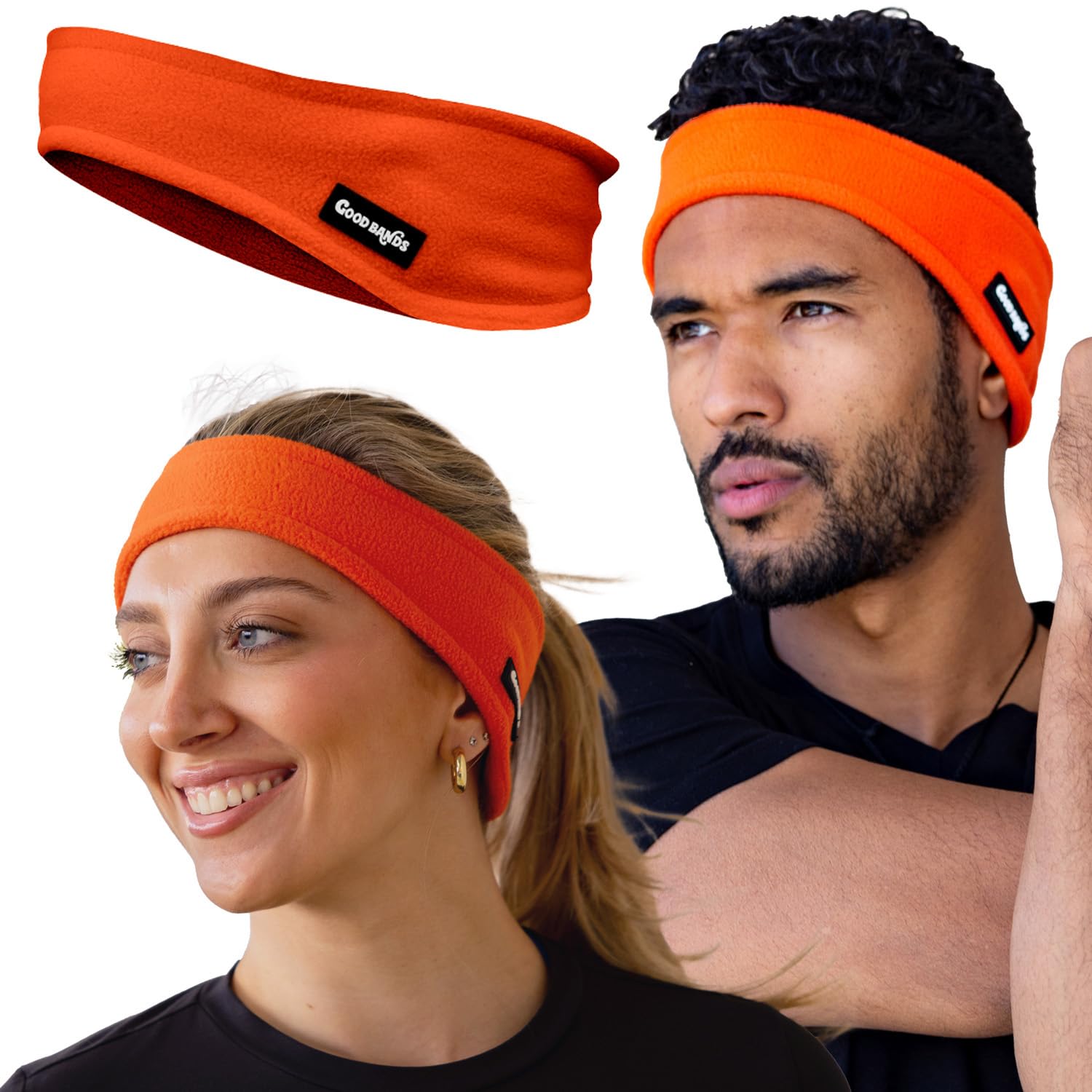
A full hat is often too much and bare ears are often too little. That gap is exactly what an ear warmer band is for: it covers the part that hurts and leaves the top of your head free to dump heat, which is usually the right compromise between about forty and fifty degrees.
For anyone who runs with headphones, a band also has a practical advantage over a hat, because it sits behind rather than over the ear and does not push earbuds out of position.
Gloves: thin, and able to work a phone
Running gloves get taken off and put back on repeatedly, so bulk is a real cost. A thin fleece glove that fits in a pocket is more useful than a heavy one that has to be carried. If you stop at lights, thin gloves also let you keep them on rather than stuffing them somewhere.
Touchscreen thread in the thumb and forefinger matters more than it sounds. Without it, every route check or track change means bare hands in cold air, which undoes the point of the gloves in the first place.
What this looks like on a shelf
In practice the kit that solves this is a thin hat, an ear band, a wind-blocking face layer and a pair of light touchscreen gloves. On our own shelf that range currently runs from $9.99 for the Wmcaps Winter Beanie for Men & Women – Warm Fleece Lined Knit Hat up to $14.95 for the Good Bands Thermal Fleece Ear Warmer Headband for Men & Women, Orange.
Everything below sits in Headwear, which currently holds 11 products. The prices shown are the ones charged at checkout, with no delivery surcharge appearing later.
- Wmcaps Winter Beanie for Men & Women – Warm Fleece Lined Knit Hat — $9.99
- Etsfmoa Unisex Lighted Beanie – Black Hands-Free LED Winter Hat — $9.99
- Fivali Grey Knit Beanie & Touchscreen Gloves Set for Cold Weather — $11.25
- AstroAI Windproof Thermal Fleece Ski Mask Balaclava – Gray Winter Face Cover — $11.99
- Simapu Thin Fisherman Knit Beanie Hat for Men & Women – Black Wool Blend — $11.99
- Good Bands Thermal Fleece Ear Warmer Headband for Men & Women, Orange — $14.95
Related reading
Two other pieces on this site cover ground next to this one. Three materials dominate the hat shelf and they behave very differently once they get damp. And on a related note, these three overlap enough to confuse the issue, and they are genuinely different once the wind picks up.
- Merino, fleece or acrylic: choosing a beanie you will actually wear
- Balaclava, ski mask or neck gaiter: which one you actually need
A reasonable starting point
If you are building from nothing, start with a band and a pair of thin gloves, and add a hat and a wind layer as it gets properly cold. That order matches where the discomfort actually shows up first, and it spreads the cost across the season rather than all at once.
We pack and ship from Hawthorne, CA. Standard carriage is $4.95, free above $45, and unused items can go back within 30 days. Ask us anything at [email protected].