Balaclava, ski mask or neck gaiter: which one you actually need

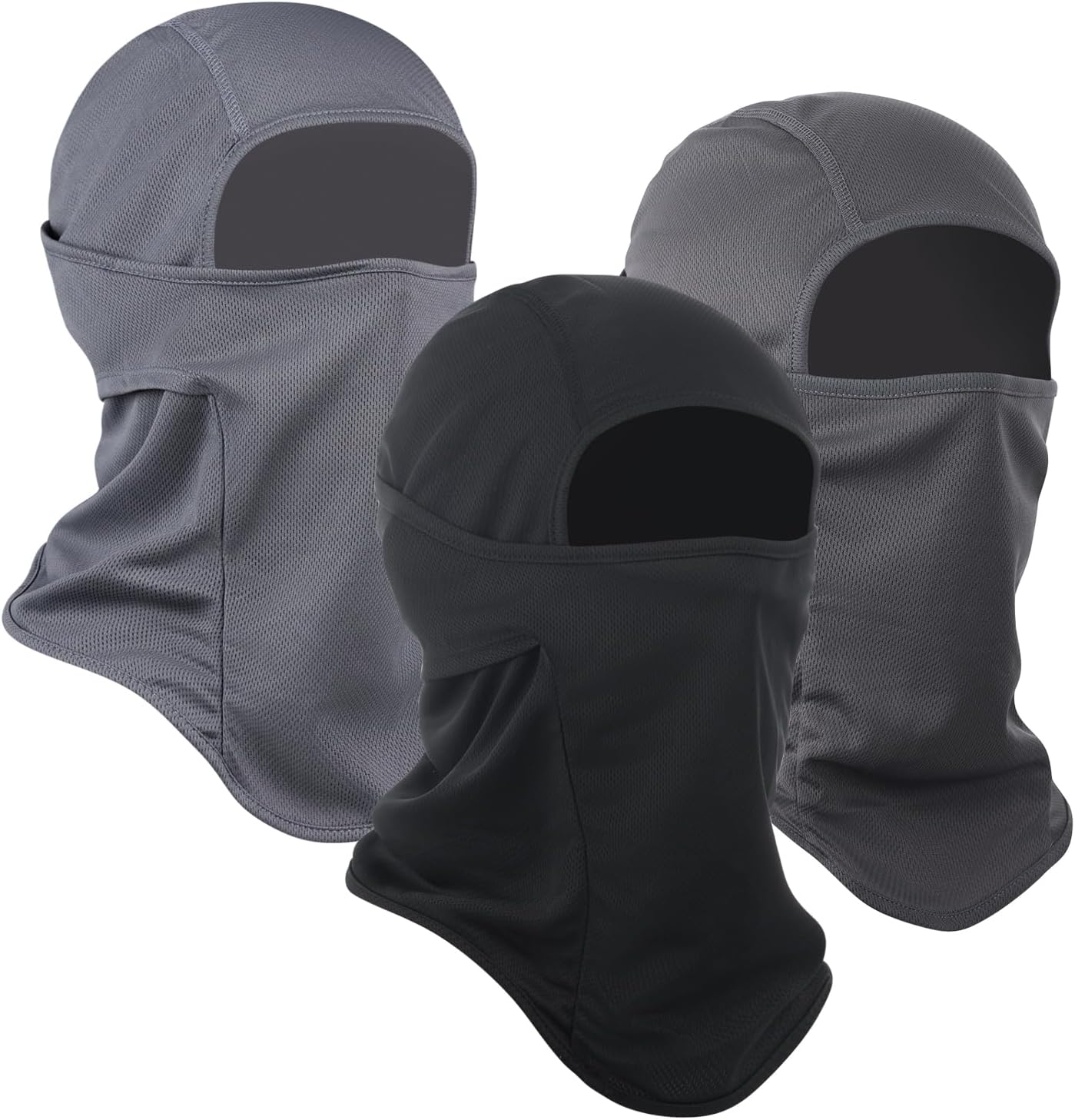
Face coverings are the piece of cold-weather kit people buy last and then wonder how they managed without. The catch is that three fairly different products get sold under overlapping names, and buying the wrong one usually means it lives in a drawer. The distinction comes down to coverage, breathability and whether it has to work under a helmet.
The neck gaiter: simplest, most versatile, least warm
A gaiter is a tube. It sits round the neck, pulls up over the chin and nose when the wind turns, and drops down when you are working hard. That adjustability is its whole appeal, and it is why it is the most-used of the three for most people.
What it does not do is seal. Air moves freely at the top and bottom, so in genuinely cold wind it takes the edge off rather than blocking it. As a first purchase it is still usually the right one, because it is the one you will actually carry.
The balaclava: coverage without gaps
A balaclava is a single piece covering head, ears, neck and most of the face, with an opening for the eyes and usually the nose or mouth. Because it is continuous, there is no gap at the neck for wind to find, which is the practical difference you feel on a fast descent or an exposed ridge.
It is also the warmest option for its weight, since it eliminates the overlap and bunching you get from a separate hat and scarf. The trade-off is that it is less adjustable — you are largely committed to the coverage it was cut for.
The ski mask: a balaclava built around goggles
In practice "ski mask" usually describes a balaclava shaped to sit cleanly with goggles and a helmet: a flatter seam across the forehead, a face opening that matches a goggle frame, and often a thinner panel at the temples so nothing bunches under the strap.
If you ski or ride with goggles, that shaping is worth having. If you do not, a general balaclava is more comfortable for everyday use because it is not cut around equipment you are not wearing.
Breathability is the thing people underestimate
Covering your mouth means breathing through fabric, and warm damp breath condenses in cold air. A face covering with no breathable panel over the mouth gets wet quickly, and wet fabric against the face in cold wind is genuinely unpleasant.
Look for a mesh or perforated panel at the mouth, or plan to wear the covering below the mouth while working hard and pull it up when you stop. Both approaches work; ignoring the issue does not.
Under a helmet, thickness is the whole problem
A helmet is fitted to your head, not to your head plus a hat. Anything thick will either not fit or will press uncomfortably, and a helmet that has been forced over padding does not sit where it was designed to sit.
This is why thin, smooth-faced liners exist. For riding or skiing, a thin balaclava that disappears under the shell is the correct answer, and a thick knitted one is not — however warm it is on its own.
Summer versions are not a marketing invention
Lightweight balaclavas in thin synthetic fabric exist for sun and dust rather than cold, and they are genuinely useful for motorcycling or working outdoors in heat. They block sun off the neck and face and are cooler than exposed skin.
If you ride year round, owning both is reasonable. What does not work is trying to use a winter balaclava in summer, or a summer one in real cold.
What is on the shelf here
The face-covering shelf covers both ends of that range — thin wind-blocking layers for cold, and lightweight versions meant for sun. On our own shelf that range currently runs from $7.99 for the Oruliss Breathable Black Balaclava Ski Mask for Cold Weather Sports up to $12.99 for the Sclzoed 3-Pack Balaclava Ski Mask for Winter Sports & Outdoors – Black, Dark Grey, Grey.
Everything below sits in Balaclavas, which currently holds 3 products. The prices shown are the ones charged at checkout, with no delivery surcharge appearing later.
- Oruliss Breathable Black Balaclava Ski Mask for Cold Weather Sports — $7.99
- ROXUN Black Balaclava Moto Face Mask – Lightweight Ice Silk Cooling Sun Protection — $8.99
- Sclzoed 3-Pack Balaclava Ski Mask for Winter Sports & Outdoors – Black, Dark Grey, Grey — $12.99
Related reading
Two other pieces on this site cover ground next to this one. Cold hands are a circulation problem before they are an insulation problem, which changes what to buy. And on a related note, a helmet is fitted to your head, not to your head plus a knitted hat — which is where most of the trouble starts.
- Why your fingers go numb first, and what actually helps
- Getting a hat to fit under a helmet without ruining the fit
Choosing quickly
If you want one thing to carry, buy a gaiter. If you are cold specifically at speed, buy a balaclava. If you wear goggles and a helmet, buy the version cut for them and make sure it is thin. Anything that has to fit under a helmet should be bought thin first and warm second.
We pack and ship from Hawthorne, CA. Standard carriage is $4.95, free above $45, and unused items can go back within 30 days. Ask us anything at [email protected].