Why your fingers go numb first, and what actually helps

Hands are usually the first thing to hurt in the cold and the last thing people spend money on. Understanding why they go numb makes the buying decision much easier, because the answer is not simply thicker gloves — and in some cases thicker gloves make the problem worse.
Your body shuts down the extremities on purpose
When core temperature drops, blood vessels in the hands and feet narrow to keep warm blood in the torso. It is a protective response and it works, but it means your fingers get less warm blood exactly when they most need it. That is why hands can be cold while your body feels fine.
The practical consequence is that warming your core often warms your hands. A warmer jacket or an extra layer on the torso can do more for numb fingers than upgrading gloves, which surprises people every winter.
Tight gloves make cold hands colder
A glove that compresses the fingers restricts the circulation you are relying on, and it flattens the air layer that provides the insulation. A snug fit feels warm indoors and performs badly outside.
Gloves should fit closely enough not to slide but loosely enough that you can wiggle your fingers freely. If the fingertips press against the end of the glove, size up.
Wind is worth more than thickness
A thin windproof glove often outperforms a thicker knitted one, because moving air strips warmth from the back of the hand faster than still cold air does. For cycling especially, wind resistance across the knuckles is the single most valuable feature.
This is why so many cycling gloves look thin. They are not under-insulated; they are prioritising the thing that actually removes heat at speed.
Wet hands are cold hands, from either direction
Moisture conducts heat away rapidly, and it arrives from two directions: rain and snow from outside, sweat from inside. A glove that keeps rain out but traps sweat will still end up wet, and then cold.
For high-output activity, breathability usually matters more than waterproofing. For standing still in bad weather, the reverse. Very few gloves do both well, which is the honest reason people own more than one pair.
Mittens are warmer, and sometimes that is the answer
Fingers share warmth when they are together, so a mitten is warmer than a glove of the same thickness. If your hands run genuinely cold and dexterity is not critical, a mitten solves the problem more effectively than any glove upgrade.
The obvious cost is that you cannot do much with your hands. That is why many people carry a thin liner glove as well and remove the mitten for anything fiddly.
Touchscreen compatibility is a real feature, not a gimmick
Every time you take a glove off to use a phone, you undo several minutes of warming. Conductive thread in the thumb and index finger means you never have to, which in cold conditions is worth more than a small difference in insulation.
It is worth checking which fingers are treated. Many gloves do two, some do only the index finger, and a few claim it across the whole palm. The listing should say, and if it does not say it, assume it is not there.
On our shelf
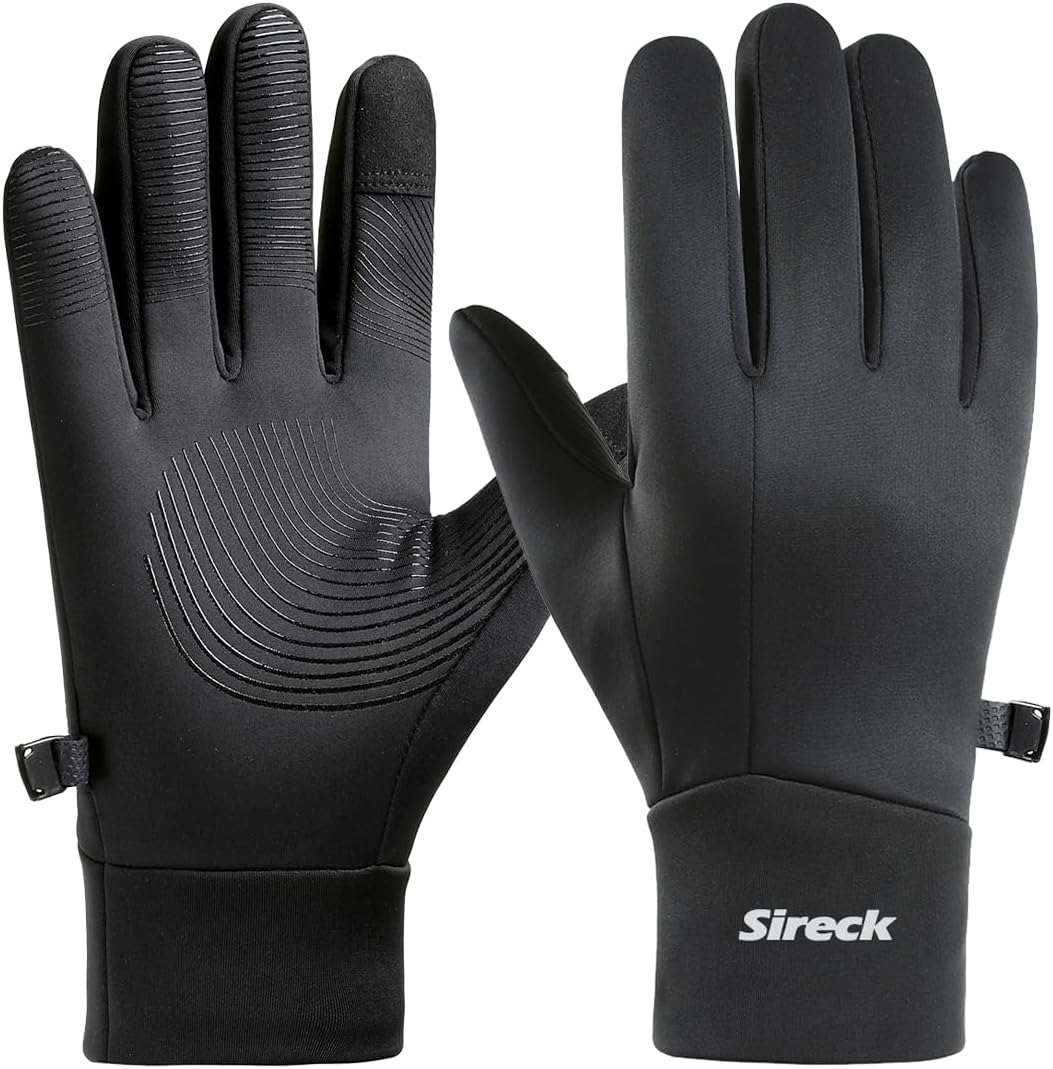
The glove selection here leans thin and wind-resistant rather than bulky, with touchscreen thread noted where it exists. On our own shelf that range currently runs from $12.99 for the Sireck Men's Water-Resistant Winter Gloves – Touchscreen & Thermal Fleece, Black up to $17.98 for the Aerynx Winter Gloves for Men & Women – Touchscreen Cold Weather Gloves.
Everything below sits in Gloves and Mittens, which currently holds 2 products. The prices shown are the ones charged at checkout, with no delivery surcharge appearing later.
- Sireck Men's Water-Resistant Winter Gloves – Touchscreen & Thermal Fleece, Black — $12.99
- Aerynx Winter Gloves for Men & Women – Touchscreen Cold Weather Gloves — $17.98
Related reading
Two other pieces on this site cover ground next to this one. A helmet is fitted to your head, not to your head plus a knitted hat — which is where most of the trouble starts. And on a related note, most winter accessories are not worn out, they are washed out. Heat and agitation do the damage.
- Getting a hat to fit under a helmet without ruining the fit
- Washing merino and fleece so a season of use does not finish them
Mistakes that make cold hands worse
The most common one is buying a size down for a snug feel. It restricts the circulation you depend on and compresses the air layer doing the insulating, so a tight glove is reliably colder than a loose one of the same thickness.
The second is putting gloves on after your hands are already cold. Gloves trap the heat your hands produce; they do not generate any. Warming your hands first, then covering them, works far better than expecting a glove to reverse the situation on its own.
When to replace a pair
Gloves fail quietly. The insulation compresses over a season of use, the windproof membrane develops pinholes at the knuckles, and the touchscreen thread wears through at the fingertip. None of that is visible, and all of it reduces performance.
A practical test is whether a pair still feels warm at the start of a ride rather than after twenty minutes. If your hands take noticeably longer to warm up than they did last winter, the insulation has packed down and it is time.
If your hands are always cold
Try three things in order: add a layer to your core, loosen your glove fit, then switch to a windproof outer or a mitten. That sequence fixes the problem more often than buying the thickest glove on the shelf, and it costs less.
We pack and ship from Hawthorne, CA. Standard carriage is $4.95, free above $45, and unused items can go back within 30 days. Ask us anything at [email protected].